
Brilliantly informative how we have now evolved into the final concepts of ”Me too”
It’s in the genes, condemn, punish, incarcerate it will not alter any transgression but continue into perpetuity. Until the bright lamp “ Our Sun “ has gone Super Nova.
We will finally extinguished with all our silly cultures and rules incinerated at last.
To star all over again in the next star formations, as part of the periodic table.
Sexual Diversity
Inuit women, bisexuality and the Primus stove
Pabupop – 23/04/2015

Photograph of the Primus stove logo, a vital tool for the Inuit.
The shaping of sexuality.
The following article emerged from research begun by Moscas de Colores while working on our Kalaallisut Gay Dictionary and Kalaallisut Lesbian Dictionary, the language spoken by the Inuit peoples of Greenland.
Through the words we collected and our need to understand them within their cultural context, we began following a thread that eventually led us to much deeper questions related to human sexual identity, its construction and its capacity for adaptation.
The internet, Greenland’s LGBT Facebook group and our email exchanges with Francesc Bailón, an anthropologist specializing in Inuit culture, constitute our main sources. Part of the content of this article is based on anthropological observations, while other parts correspond to our own interpretations and hypotheses developed from them.
Inuit words.
After collecting more than 2,300 words and expressions related to sexual diversity in 68 different languages between both dictionaries and the glossary, we began to notice something fascinating: words, and especially insults, tell us about the peoples who use them and about the historical periods in which they originated.
They function in a way similar to fossils. They preserve traces of old ways of thinking, sexual norms, social structures and cultural conflicts.
Words do not merely describe social realities: they also reveal how societies relate to those realities.
In the case of Kalaallisut, one of the most striking aspects was the absence of insults related to sexual diversity. We found descriptive words such as Arnaqatiminoortoq, “a woman who likes women”, but no equivalents to many of the insults commonly found in our societies.
Were we facing a different kind of culture? Or had we simply failed to find those words? People from Greenland themselves confirmed to us that such insults did not exist. That led us to take a deeper interest in Inuit culture and its relationship with sexuality.
The Inuit peoples of Greenland.
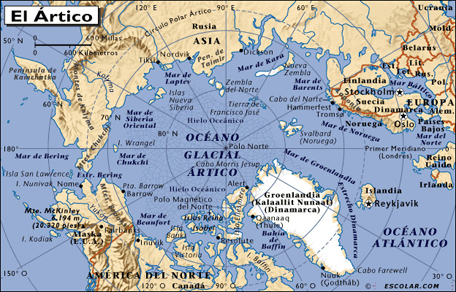
Map of the Earth around the North Pole. The Inuit inhabit the Arctic from Alaska to Siberia.
In 1977, the first circumpolar conference of Arctic peoples was held in Alaska. There they decided to adopt the term Inuit, meaning “human beings,” rejecting the Western term “Eskimo,” which they had never used to define themselves.
The Inuit of Greenland arrived from Alaska approximately 650 years ago. Today, Greenland has just over 56,000 inhabitants spread across vast territories with an extremely low population density.
Adapting to the climate
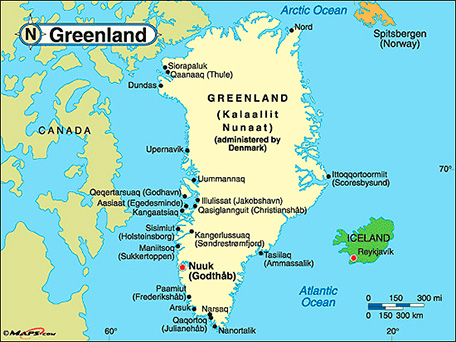
Kalaallit Nunaat or Greenland, the largest island on Earth. The Inuit arrived on the island around 650 years ago.
Living in the Arctic requires adaptation. In such an extreme environment, with long winters and lethal temperatures, survival depends on cooperation and group cohesion.
Traditional Inuit communities were small, scattered and had very limited entertainment infrastructure. Sharing resources and maintaining social harmony were just as important as obtaining food or fuel.
Their traditional conflict resolution system is particularly significant. Except in extreme cases, many disputes were settled through song duels. As if it were a hip hop freestyle battle, the winner was the person who managed to ridicule the opponent most effectively or make them lose their composure. In a culture where coexistence was essential, social cohesion held enormous value.
Inuit women and fire
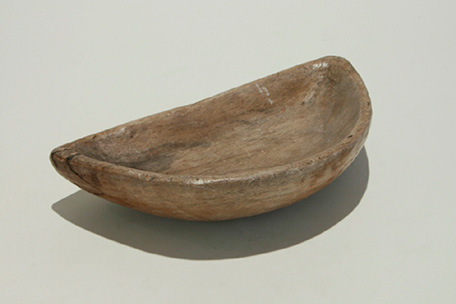
Soapstone lamp or Qulleq. It was always kept lit and remained the responsibility of Inuit women until the arrival of the Primus stove.
The sexual division of labor responded mainly to practical needs. Men were responsible for hunting and fishing. Women were responsible for fire, an essential element for survival.
The relationship between Inuit women and fire was so important that when a woman died, she was buried with her qulleq, a lamp made of soapstone fueled with seal fat and dry moss.
When men went hunting for several days, women usually accompanied them in order to tend the fire. If a wife could not go, another woman could accompany the hunter instead.
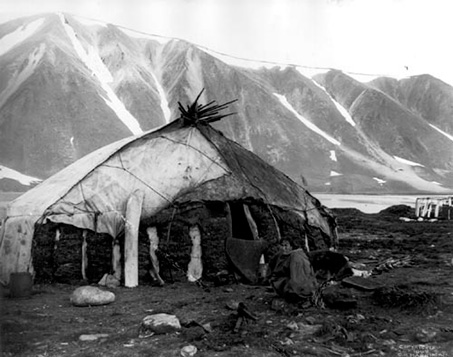
Traditional Inuit house. Greenland’s traditional dwelling was not the igloo, but structures made of stone, turf and skins.
Inuit sexuality
Traditional Inuit sexuality appears to have been less moralized than in many Western societies. In small communities where cooperation was essential and genetic exchange limited, sex was not surrounded by the same level of taboo, guilt or prohibition.
Practices such as polygamy and, in some regions, sexual exchanges between couples existed. Sex appeared to function not only as reproductive behavior, but also as a form of social relationship integrated into the community.
However, this does not mean the absence of rules. Sexuality was socially regulated, although in a very different way from our own societies.
Sexual exchanges between couples had to be reciprocal and accepted by both parties. When that reciprocity was broken and a woman continued having sexual relations with another man outside the established agreement, very serious conflicts could arise.
However, a woman could have sexual relations with another woman without necessarily generating conflict or altering the dynamics of reciprocity between couples, as did occur in relationships between a woman and another man.
When a woman maintained sexual relations with another man outside an accepted exchange, the situation could become a rupture of social and communal balance that could even lead to murder.
What seemed to matter most was not sex itself, but the way it affected cohesion and reciprocity within the group.
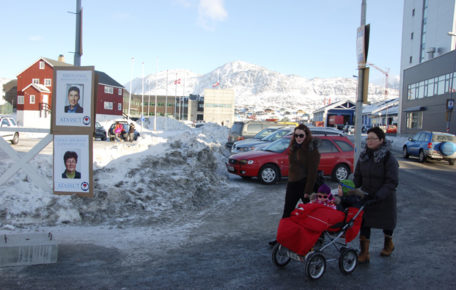
Nuuk today with election posters. Greenland combines modernity and tradition.
Prostitution was practically nonexistent in Greenland. There does not appear to be much demand for something that is not especially restricted socially.
It is well known that some European explorers were welcomed with food, shelter and even the possibility of having sexual relations with the host’s wife. This likely reflected both hospitality and social or reproductive strategies adapted to small, isolated communities.
In this context, sex, love, relationships and exclusivity did not necessarily mean exactly the same things they mean in our culture.
The arrival of the Primus
Contact with the West profoundly transformed Greenland. Alongside technological advances came diseases, alcoholism, cultural uprooting and intense processes of colonial influence.
Among the technological innovations introduced from the late 19th and early 20th centuries, the Primus kerosene stove played a particularly important role. Its ability to control fire greatly facilitated hunting expeditions.
This apparently technical change also modified everyday social organization. Women no longer needed to accompany men during hunting expeditions and began spending much more time together within the settlements.
The Primus and same-sex relationships between women
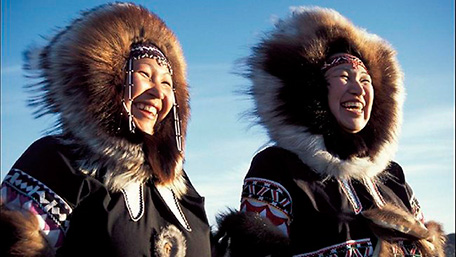
Inuit women today.
Today, different testimonies and observations describe sexual relations between Inuit women as relatively visible and socially integrated in certain contexts.
According to various anthropological observations, these relationships are often integrated within the couple itself and may be naturally accepted by many men, especially if they are allowed to watch or participate.
Some observations connect this phenomenon to the long absences of men due to hunting and to the amount of time women spend living together.
We do not know exactly how or when these social and sexual changes began to occur. However, same-sex relationships between women barely appear in earlier traditional references, when women routinely accompanied men during hunting expeditions.
From our point of view, the Inuit case is especially interesting because it shows how certain sexual behaviors may be encouraged, integrated or normalized depending on the social and cultural organization of a community.
The Primus did not “create” new sexual possibilities for Inuit women. But it may have altered social and relational dynamics within a sexually flexible and less repressive culture, facilitating certain sexual behaviors that later became naturally integrated.
The plasticity of human sexuality.

Plasticine and sexual plasticity. In sexuality, as with plasticine, everything leaves a mark.
Sexual plasticity does not mean that anyone can become anything or that sexuality changes simply by willpower. It means that human sexuality possesses a capacity for adaptation and reorganization throughout life within personal, social and life circumstances.
Human sexuality has probably always included homosexual and heterosexual behavior, diverse identities, transgender experiences, intersex conditions and many other phenomena, just as occurs in many other species.
What has changed enormously throughout history is not only sexual behavior itself, but also the way it has been interpreted.
At different historical moments, what had once been socially integrated came to be considered vice, sin, crime, disease or a right. For centuries, people have searched for the “causes” of certain forms of sexual identity as if they were phenomena separate from the rest of human sexuality.
Differences have always been emphasized, but similarities have rarely been explored.
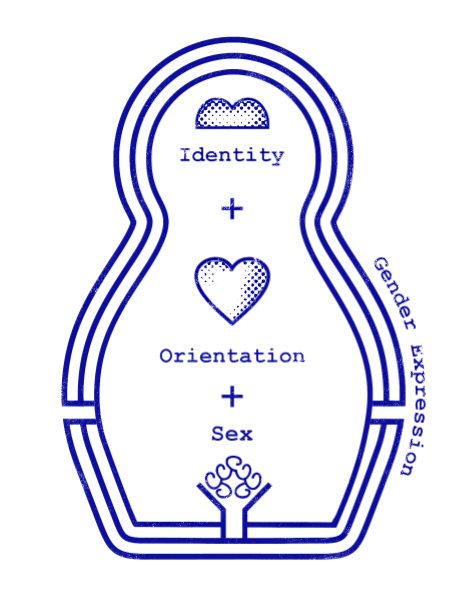
However, the causes of homosexual behavior probably lie in the same places as those of heterosexual behavior. Both are part of the same system: sexual identity.
Inuit sexuality and sexual identity
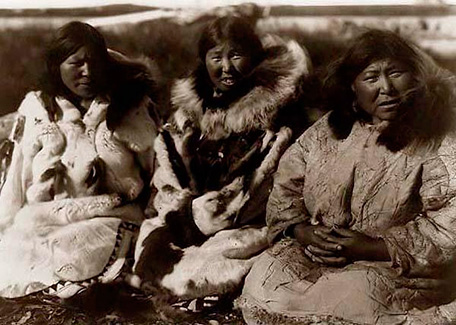
Inuit women. Nothing changed in their biology for certain sexual behaviors to become socially accepted.
Inuit women did not undergo a sudden genetic transformation. Nor does it seem necessary to resort to diseases, trauma or “special causes” to understand certain sexual behaviors.
What we observe is something much more human and probably much more common: people adapting to the possibilities, relationships and meanings offered by their cultural environment.
Cultures do not create human sexuality from nothing, but they can encourage, limit, channel or normalize certain possibilities already existing within it.
The Inuit case is interesting because it helps us understand that orientation, identity and sexual behavior are not exactly the same thing and do not always evolve in identical ways.
Sexuality of Inuit men
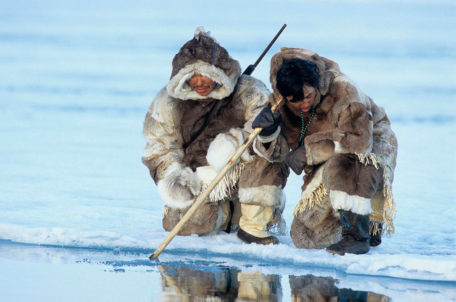
Inuit men hunting. In the past, women accompanied men during hunting expeditions.
Another interesting question remains open: how did these changes affect male sexuality?
Men also experienced profound social transformations, spent long periods separated from their partners and participated in the same sexually flexible culture. However, as far as we know, there are no clear references to similar changes in male sexuality.
Nevertheless, some testimonies and observations suggest that certain same-sex behavior among Inuit men may have existed, although very few clear references to it remain.
We hope to continue learning and contributing information about this subject in the future.
Inuit culture: much more than information.
For us, learning about Inuit culture has also been a deeply transformative personal experience.
It has allowed us to imagine what a society might look like where sexual diversity is not merely a right, but something naturally integrated into everyday life.
It has also shown us that there are other ways of understanding human relationships, coexistence and sexuality.
However, the integration of certain forms of sexual diversity does not mean that contemporary Greenland is free from other serious social problems. Alcoholism, violence and suicide are also part of the complex reality of today’s Inuit communities.
Their hospitality, the importance placed on social harmony, the absence of certain insults related to sexuality and their capacity for sharing make Inuit culture a fascinating reference from which we can learn.
Acknowledgements:
- To Tina E., Hans B. J. and Ikuala N. C., from Greenland, for their help :)
- To Mª Ángeles R. B. for her help and encouragement.
- To the great Francesc Bailón, for his help, generosity and for sharing part of his knowledge and experiences regarding Inuit culture.

Visit these links to learn more about his work and expeditions.

http://culturainuit.wordpress.com/
http://www.antropologiainuit.com/
https://www.facebook.com/pages/Francesc-Bailón-Antropología-Inuit/
Tag :Arctic peoples, Bisexuality, Compared Sexuality, Greenland, History, Homosexuality, Identidad Sexual, Inuit, Inuit culture, Inuit sexuality, Inuit women, Kalaallisut, Kalaallit, LGBT, Primus stove, Sexual Diversity, Sexual Identity, Sexual Plasticity, Sexual behavior, anthropology, female bisexuality, female homosexuality, female sexuality, homosexual behavior, human sexuality, lesbianism, sexuality and cultureAnd leave us a comment
2 Comments
▲ Close coments
Leave a Reply
Hi Nicolas!
We regret to inform you that our star, the sun, does not have enough mass to explode in a supernova. What does happen within 4000 -5000 million years is that the Sun will become a red giant that will burn our planet.
We understand from your message that you suggest the futility of the struggle to make people happier, given the future of our planet. But don’t you think that is too much time to justify that it’s not worth trying to improve things?
And even more, do you think that will be the end of humanity? Do you think it is impossible for us to leave this beautiful planet? Don’t you think that the humanity of the future will be more egalitarian and respect people’s sexual freedom?
Thank you very much for your comment, but please, next time try to be not so off-topic.
Regards


Something to say?
Tell us what you think of this article. If it’s good or bad, if you think we are idiots, or if you see us in hell. Even if you are a few words person, to improve people’s lives, help us spread it.
Share it in your networks!