
Your written English is so poor, I couldn’t be bothered to read to the end of the article . It didn’t make sense, so there was no point.
Sexual Diversity
The sexual behavior of the Sambia
Pabupop – 12/05/2013
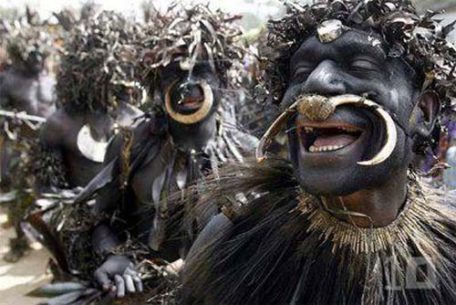
Some Sambia tribes developed a sexual culture very different from that of the West.
The Sambia and the cultural relativity of sexuality.
What would happen if an American newborn were raised from childhood within a Sambia tribe in Papua New Guinea? What if a Sambia child were raised from birth in a Western family? Both would probably understand sexuality, desire, masculinity and human relationships in completely different ways.
What if many of the ideas we take for granted about sexuality were simply the product of our culture and our historical moment?
For centuries, different religious, moral and political systems have attempted to impose a single, rigid vision of human sexuality, focused exclusively on reproduction. Any other form of sexuality was considered first a sin, then a crime and finally a mental illness.
However, anthropology has spent decades showing that sexual behaviors, sexual categories and even the very meaning of sex vary enormously across cultures.
One of the best known cases is that of the Sambia — a name used by anthropologist Gilbert Herdt to refer to the present-day Simbari — a tribal society studied mainly during the 1970s and 1980s.
During that period, certain male initiation rituals attracted enormous attention from Western anthropology because they included sexual practices between males that completely challenged Western sexual categories.
Many of those practices have disappeared or changed profoundly over time, but the Sambia case remains an important reference for understanding how culture can shape the social meaning of sexuality.
Below you can watch a short video about the Sambia. Although it is narrated in German, the images allow us to observe some aspects of their rituals and way of life.
Semen as a source of life and masculinity.
The Sambia traditionally developed a deeply hierarchical society strictly segregated by sex, where masculinity had to be constructed through collective initiation rituals.
In this culture, semen was not understood simply as a reproductive fluid. It represented strength, growth, vital energy and spiritual continuity. According to their traditional beliefs, boys did not spontaneously develop masculinity: they needed to receive semen from adult men in order to grow physically and socially.
For this reason, male initiation rituals included practices that in the West would be classified as homosexual. Young boys performed fellatio on older males and ingested semen as part of a ritual process considered necessary to become strong and fertile men. These practices began in childhood and could continue until heterosexual marriage.
From a contemporary Western perspective, these practices could be classified as homosexual behavior. However, for the Sambia they did not have the cultural, identity-based or social meaning that the West has historically associated with homosexuality.
For them, these practices were related to:
- the transmission of masculinity,
- physical strength,
- spirituality,
- bodily growth,
- and male social cohesion.
This is precisely why the Sambia case is so important for the anthropology of sexuality: it demonstrates that the meaning of sex is not universal, but deeply cultural.
Sex, culture and human sexual plasticity.
The Sambia case does not demonstrate that “homosexuality is cultural” nor that biology does not exist. What it shows is something much more complex and interesting: that human sexuality possesses enormous plasticity, both at the individual level — as we explain in our article about sexual plasticity — and across different cultures and historical periods.
Human biology provides sexual capacity and potential. But culture shapes:
- how we interpret desire,
- which behaviors we consider acceptable,
- the meaning we give to sex,
- and how we organize emotional and sexual relationships.
This explains why Western categories — heterosexual, homosexual or bisexual — do not always fit well when studying other human societies.
In the West, sexuality is often understood as a matter of individual identity. The Sambia, by contrast, interpreted many sexual behaviors as social rituals related to growth and the transmission of masculinity. The same sexual behavior could acquire completely different meanings depending on the culture.
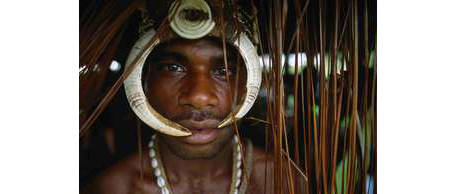
Western sexual categories cannot always be applied to other human cultures.
The same sexual behavior can be understood as initiation, spirituality, bodily strengthening, social bonding, masculinity construction or social reproduction depending on the culture.
As happens in many other animal species, human sexuality displays remarkable diversity in behaviors and forms of expression. Sexual behaviors between individuals of the same sex appear in many different cultures and also in hundreds of animal species, making it very difficult to argue that they are “unnatural.”
The idea that there is a single universal human sexuality collapses when we observe the enormous diversity of sexual behaviors present across different societies and historical periods.
The Sambia and Western sexual categories.
Most research on the Sambia was carried out during the 1970s and 1980s. Since then, Simbari society has changed profoundly due to schooling, the expansion of Christianity, the influence of the modern state and continuous contact with Western culture.
Many of the old male initiation rituals have disappeared or changed deeply. Nevertheless, the anthropological interest of the Sambia case remains enormous because it helps us understand to what extent sexual behaviors and their meanings depend on historical and cultural context.
The goal is not to idealize or reproduce those practices, but to understand that Western sexual categories are neither universal, immutable nor biologically determined in a single way.
For decades, some researchers used the Sambia case as an example of “ritualized homosexuality.” However, even this concept has later been criticized by numerous anthropologists because applying modern Western categories to such different societies can be misleading.
Today, many specialists believe that the real interest of the Sambia case does not lie in labeling its members as heterosexual, homosexual or bisexual, but rather in showing that:
- sexual categories are not universal,
- human sexuality is enormously diverse,
- and cultures construct very different meanings around sex.
Conclusion.
The Sambia show that human sexuality cannot be reduced to rigid and universal categories. The same sexual behavior can be understood as reproduction, spirituality, initiation, erotic play, social bonding or masculinity construction depending on the culture.
Scientific and anthropological evidence suggests that human sexuality cannot be understood as a rigid system divided into completely distinct categories. Rather, it seems to function as a flexible continuum of possibilities whose expression depends both on biology and on social and cultural environment.
Understanding this diversity not only helps us better understand other cultures. It also forces us to question many prejudices still present in our own societies.
Sources:
- Herdt, Gilbert. Guardians of the Flutes.
- Herdt, Gilbert (ed.). Ritualized Homosexuality in Melanesia.
- Anthropological research on the Simbari people of Papua New Guinea.
Tag :Compared Sexuality, Gilbert Herdt, Homosexuality, Papua New Guinea, Sambia, Sexual Diversity, Sexual Identity, Sexual Plasticity, Sexual behavior, Sexuality, anthropology, cultural relativityAnd leave us a comment
10 Comments
▲ Close coments
Leave a Reply
We’re so sorry, Barbara.
You’re right. We are working on it, not only the translation but also the content. Until then, you can try with the original in Spanish:
http://blog.moscasdecolores.com/es/diversidad-sexual/comportamiento-sexual-sambia/I like your article
Thank you very much, Anon!
Love.
Hi again, Barbara!
We have worked in the translation again. Maybe you could try again. If you need some explanation, please don’t hesitate to contact us.
Miss Dickingston: I believe that is a rather elitist comment. When dealing with persons who speak English as a secondary–or even tertiary–language, it’s important to be patient and read through the translation as best as one can. I believe that, because you chose not to read the article, you missed out on a thoughtful, intelligently-written article that could have otherwise benefitted and enlightened you. If you ever wrote an article in a non-English language, I’d hope that others would be more tolerant and open-minded than you.
Thank you very much, DL!
After Barbara’s comment, and since we already had a translator based in the United States, we revised the translation of the article and published it.We are currently working on an extension of this article on Ritual Homosexuality in Melanesia, although it is quite extensive work and we do not know when we will finish it. I don’t know if you know the whole of our project:
https://www.moscasdecolores.com/en/
Thank you very much again, you have been very kind.
Regards.
Barbara, if you could not understand the article, then your English is poor.
Pabupop: Thank you for reminding us all of the importance of respect for different cultural beliefs. (It works both ways; just as we expect others to be tolerant of us, we need to model respect in how we treat those who are “different”.) The Sambia tribes of New Guinea obviously express their sexual proclivities quite differently than most Americans, and many would quickly refer to them as “homosexual” or “bisexual”. However, as you keenly point out, slapping labels on others can backfire.
However, there is a certain legitimacy to using labels. Labeling one as “gay” can help produce affirmation of one’s own homosexuality. You mention the “nature/nurture” theory by stating, “The sexuality of people is neither fixed nor determined.” Scientific evidence strongly suggests the role of DNA in determining one’s sexual orientation. Those who live a secretive life of pretending to be heterosexual–when one is truly homosexual–are usually quite unhappy with their lives. This is an example of when a label can be effective, in the sense that it helps effect positive change in behavior through acceptance of one’s sexual orientation.
Thanks for this exemplary, thought-provoking article!
Hi DL!
Thank you very much for your comment. You raise two very interesting questions, one in relation to labels and another in relation to the genetic determinants of sexual orientation.
Labels are necessary to be able to talk about things, to define things, but they are not things. There is a label, homosexual, that has become identitarian, as you say, necessarily identitarian, because it has allowed us to advance in rights and freedoms, as well as ending or reduce the suffering of many people.
However, homosexuality is nothing more than a social construction. The only thing that really exists is homosexual behavior. Similarly, heterosexuality, which was created at the same time as homosexuality, is nothing more than a social construction. Therefore, the only thing that really exists is heterosexual behavior. Humans have integrated these two behaviors into our culture through these two labels or identities, to which we have gradually added new ones.
That said, and in relation to the above, we go with the second question you raise, the genetic determinants of sexual orientation.
Science has been looking for the genetic determinants of homosexuality based on the wrong premise: the difference. That scientific evidence you are talking about does not exist and will never be found in the DNA. To begin to shed light on homosexual behavior they must take a Copernican Revolution and focus on the similarities.
Obviously, a person’s sexuality has a genetic basis, basically because we are not stones, but that genetic basis is unique and generates everything. We have plastic sexuality and we are sexual opportunists. Examples are many and well known. Sex has more functions than those normally discussed, and it is in those functions where you will find the utility of that any human being having flexible sexuality, unfortunately limited, only by culture.
We can continue with this talk as much as you want. Until then I recommend the rest of the articles in this blog, with which we have been reeling, bit by bit, everything I just wrote in a synthesized way.
It has been a pleasure to talk with you.
Regards.


Something to say?
Tell us what you think of this article. If it’s good or bad, if you think we are idiots, or if you see us in hell. Even if you are a few words person, to improve people’s lives, help us spread it.
Share it in your networks!