
Sexual Diversity
What Is Gender?
Gender is often presented as something natural, fixed and immutable. Many people believe that being a man or a woman is an automatic consequence of biology. However, when we look at history, cultural diversity and human experience, a far more complex reality begins to emerge.
Ideas about masculinity, femininity and gender roles constantly change depending on the historical period and the society. In addition, people do not experience gender in the same way. For some, gender occupies a central place in their personal experience, especially when there is a discrepancy between gender identity and the gender assigned at birth.
For other people, gender may be experienced in a much more natural and unconscious way, precisely because both dimensions remain relatively consistent throughout their lives.
All of this suggests that gender is not a universal and static reality, but rather a social, cultural and subjective phenomenon that is constantly evolving.
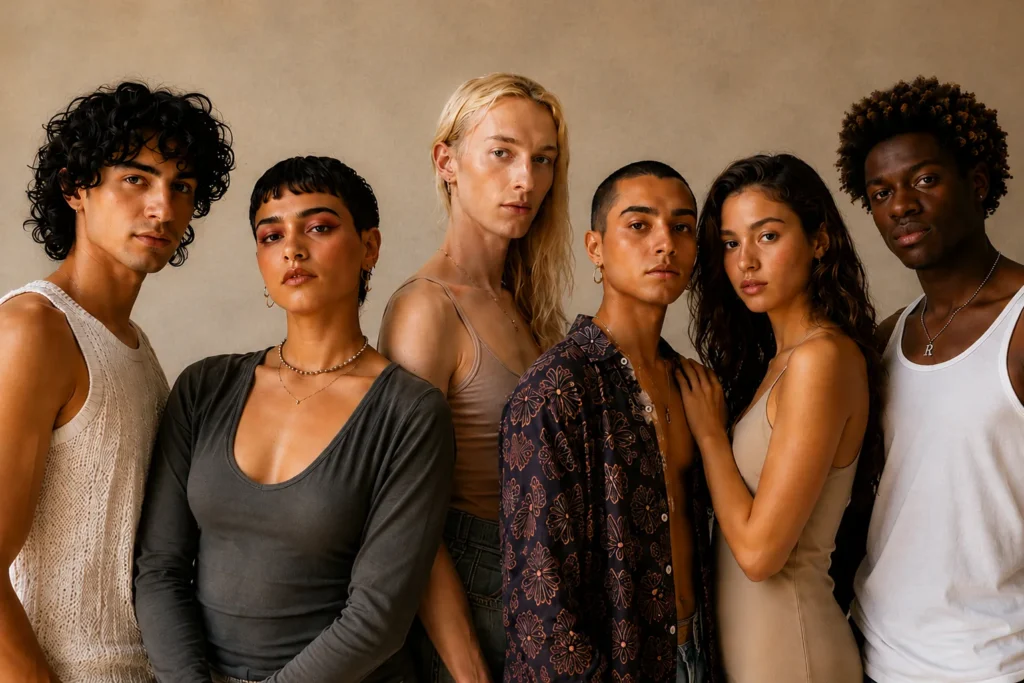
The diversity of bodies, identities and gender expressions is part of the natural variation of the human species.
What is gender?
Gender refers to the set of norms, expectations and social meanings that societies construct around sexual differences.
It includes aspects such as:
- appearance;
- behaviour;
- emotional expression;
- social roles;
- ways of relating to others;
- and socially accepted ways of being a man or a woman.
Gender therefore does not simply describe individual characteristics. It also shapes cultural models and social expectations regarding how people are supposed to behave.
Biological sex and gender
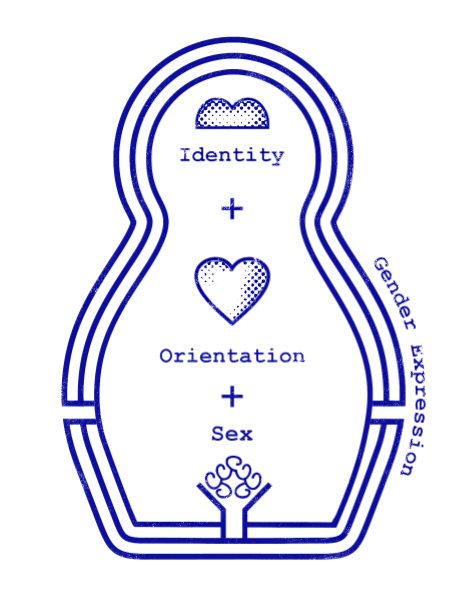
In the sexual identity model, biological sex and gender belong to different dimensions.
The biological categories, which refer to bodily sexual characteristics, are:
- male;
- female;
- and intersexual.
By contrast, categories such as:
- boy,
- girl,
- man,
- woman,
belong to the realm of gender identity and gender expression.
This distinction is important because human experience shows that biological sex and gender identity do not always remain aligned.
There are males who may identify and live socially as women, and females who may identify and live socially as men.
This means that automatically assigning a gender based on the biological sex observed at birth, as has traditionally been done in most societies, is not without discrepancies, conflicts or misunderstandings regarding a person’s actual lived experience.
Gender assigned at birth
When a baby is born, their external genitalia are usually observed and, based on that observation, a gender is immediately assigned, such as “boy” or “girl”.
From that moment on, expectations begin to emerge regarding:
- appearance;
- behaviour;
- games and toys;
- emotional expression;
- social roles;
- and even the future expected for that person.
In other words, a social and cultural interpretation is rapidly built upon a bodily characteristic.
In most human societies, the biological sex observed at birth serves as the basis for assigning gender.
Many people perceive this process as something completely natural because it takes place from the very beginning of life and forms part of the normal functioning of society. However, it is usually perceived that way mainly when biological sex and gender identity remain relatively aligned throughout a person’s development.
When this alignment does not occur, the apparent “naturalness” of the process begins to be questioned, and the social and cultural dimensions of gender become far more visible.
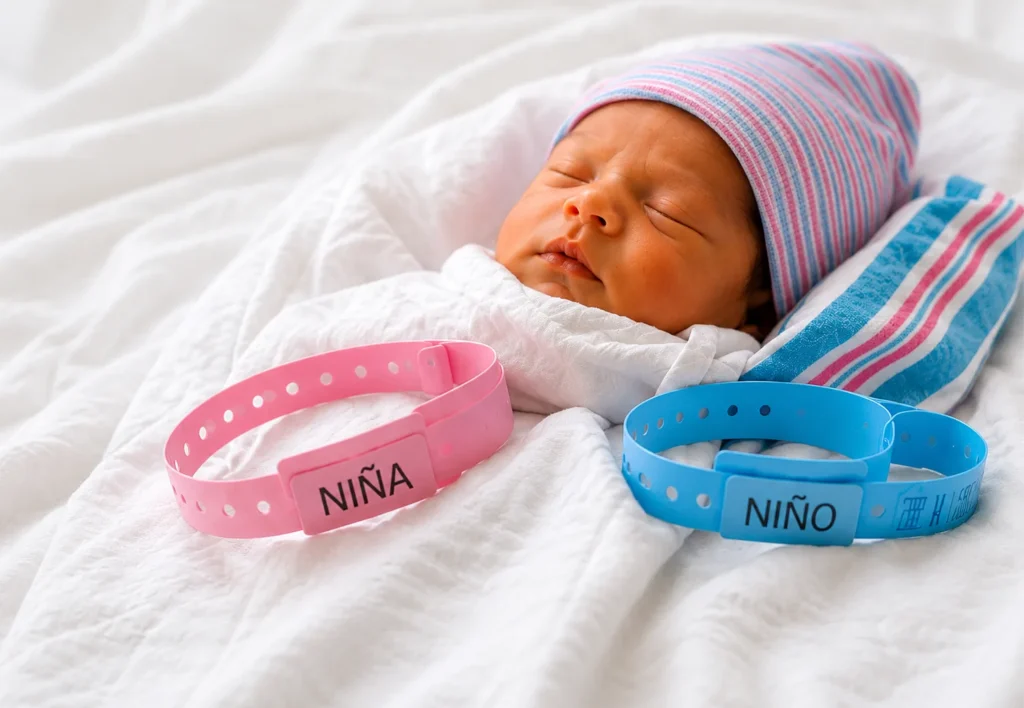
From birth, gender is assigned based on bodily observation, together with expectations and social roles.
The case of intersex people
The situation of intersex people illustrates the complexity of this process particularly well.
In some cases, external genitalia present ambiguous or mixed characteristics that make immediate classification within the traditional binary model difficult.
For a long time, many societies and medical systems attempted to assign a gender to these individuals as quickly as possible, even performing early surgical interventions aimed at modifying genitalia in order to approximate male or female bodily models.
These practices reflect the extent to which many societies have considered it necessary to fit human bodies into rigid gender categories, often causing profound suffering later in adulthood.
Within the sexual identity model, intersex variations are not interpreted as errors that must be corrected, but rather as part of the natural and evolutionary diversity of the human species.
From this perspective, medical interventions would only be necessary when there are genuine physical health issues, and not simply to adapt bodies to social expectations or rigid gender models.
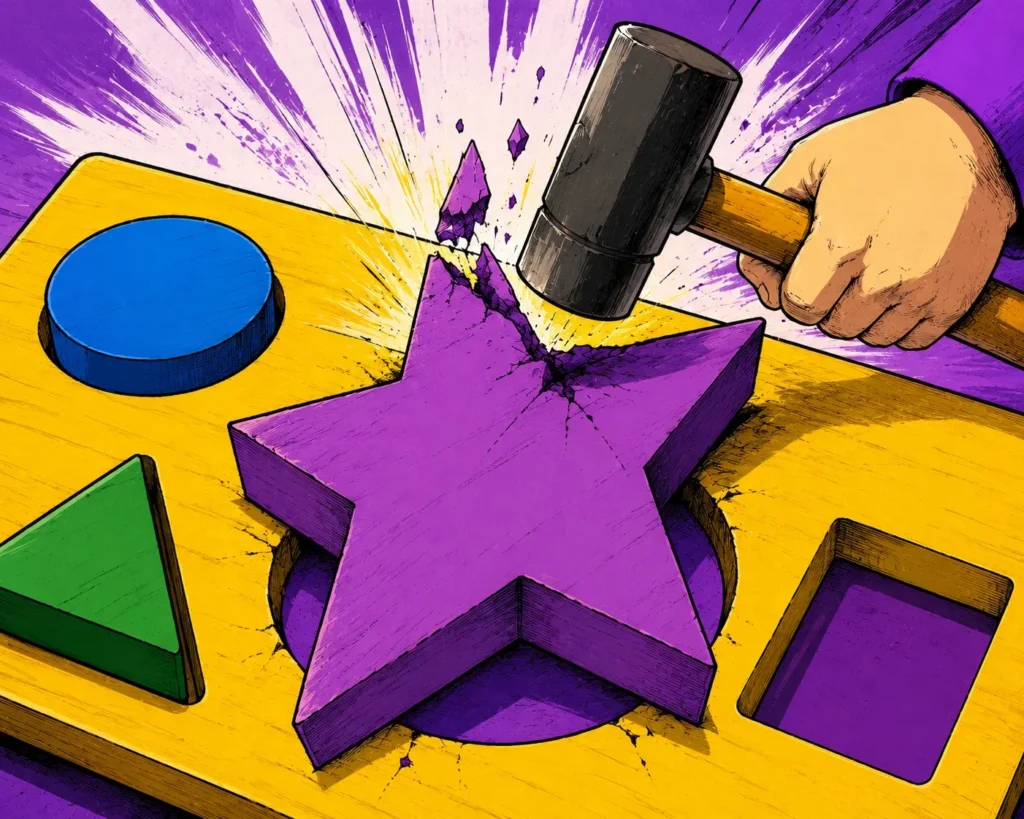
Many societies attempt to force human bodily diversity into rigid categories, even when reality does not naturally fit within them.
Gender changes across cultures and historical periods
As we have already seen, many people perceive gender as something natural and immutable. However, history and anthropology show that ideas about masculinity and femininity constantly change.
For example:
- there have been societies in which certain garments now considered feminine were masculine, such as high heels, historically worn by men as symbols of status and power;
- there were periods, especially during European Romanticism in the late eighteenth and early nineteenth centuries, when emotions such as sensitivity, emotional expression and even crying were regarded as masculine virtues associated with honour, nobility and moral depth;
- some cultures recognize more than two genders, such as the Two-Spirit people found in various Indigenous cultures of North America or the hijras of India;
- and many norms once considered “natural” within a particular historical period eventually disappear or evolve over time, as happened with the idea that certain colours, toys or professions belonged exclusively to men or women.
If gender were an automatic and immutable consequence of biology, these cultural and historical differences would be difficult to explain.
The intimate experience of gender
Beyond social norms, many people describe an internal experience related to gender.
For some people, gender occupies a central place in their personal identity, and they feel a deep connection with it. Others experience gender in a more flexible, changing or secondary way, or barely think about it at all because their experience naturally aligns with the gender assigned at birth.
In many cases, the experience of gender is as intimate and difficult to explain as the very feeling of being oneself. Some people describe the sensation of living a role that does not truly belong to them, as if the world expected from them a version that does not genuinely reflect who they are. Others, by contrast, feel that their gender forms such a natural part of themselves that they rarely even need to think about it.
All of this suggests that people’s relationship with gender can take many different forms.
Transgender and transsexual people
The existence of transgender and transsexual people shows that the gender assigned at birth does not always coincide with a person’s gender identity.
For example, a person identified as a boy at birth may later develop a deep identification with womanhood. Or vice versa.
There are also people whose experience of gender does not fully fit within the traditional categories of man or woman.
Generally speaking, the term “transgender” is used to refer to people whose gender identity or gender experience differs in some way from the gender assigned at birth.
Meanwhile, a transsexual person would be a transgender person who has initiated or completed a bodily transition aligned with their gender identity.
These individuals often experience an intense form of dysphoria, known as gender dysphoria, which leads them to desire physical changes to their bodies, while other transgender people experience gender in a more flexible way and do not wish to undergo surgical interventions.
There is no single way to live these experiences, nor a single valid way to experience gender.
Bodies, identity and social norms
As we have already seen in the case of intersex people, many societies tend to regard the correspondence between certain bodies and certain genders as mandatory.
However, within the sexual identity model, there is no objective reason why particular genitalia should necessarily be associated with a specific gender identity.
Why couldn’t a woman have a penis?
Why couldn’t a man have a vulva?
Many societies have treated these associations as absolute and immutable truths. Yet gender categories are human constructions that change across time and cultures.
Nature does not establish social categories or rules dictating how human bodies should be interpreted. It is societies that create these cultural associations and often present them as if they were inevitable.
Bodily diversity and diversity of identities are part of the natural variation of the human species.
Suffering and social rigidity
Much of the suffering related to gender does not arise solely from identities or bodies themselves, but also from the social pressure to fit within rigid models.
Societies that impose very strict expectations regarding how a man or a woman should be tend to generate greater conflict in those who do not fully fit within those categories.
As we have already seen, many experiences of suffering emerge when human diversity is treated as an error that must be corrected rather than as a natural variation of the species.
Understanding gender as a changing social construction allows us to better understand human diversity and reduce some of the suffering associated with rigid social norms.
What would happen if gender did not exist?
Throughout history, many societies have treated gender as a natural and inevitable consequence of biological sex. However, as we have seen throughout this article, much of what we understand as masculine or feminine actually depends on social norms, expectations and cultural constructions.
If gender did not exist, different bodies and different sexual characteristics would still exist. Males, females and intersex people would still exist. But many of the social expectations automatically associated with those bodies would probably disappear.
Certain ways of dressing, behaving, expressing oneself or relating to others would no longer be interpreted as masculine or feminine. Many activities, emotions or personality traits would no longer be obligatorily linked to a specific gender.
Perhaps many people would not even experience conflict regarding gender, precisely because social categories would become far more flexible or far less important.
This does not necessarily mean that every experience related to gender identity would disappear. Some people might still experience forms of bodily, aesthetic or psychological identification. However, those experiences would probably be lived very differently in the absence of such rigid systems of gender.
How much of the suffering related to gender truly comes from the body itself, and how much comes from the social norms constructed around it?
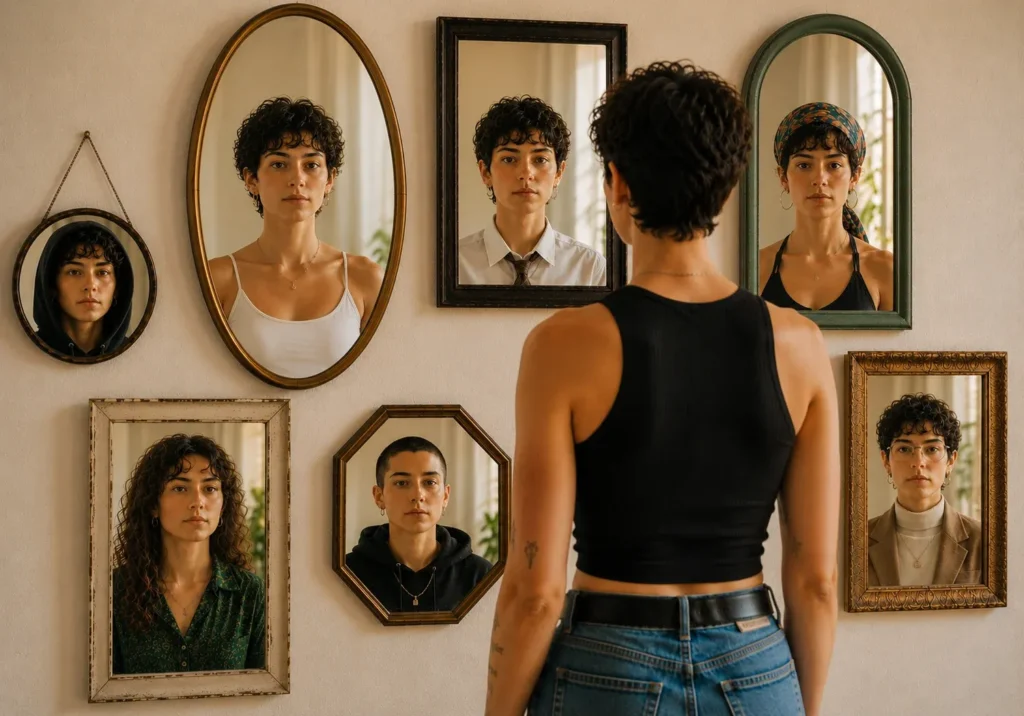
Gender categories are social constructions that change across time and culture. Human experience is always broader than the categories used to define it.
In the sexual identity model, bodily diversity, diversity of identities and diversity of human experiences are all part of the natural variation of the human species.
The real problem is not human sexual diversity, but the difficulty many societies have in accepting that human reality is far broader and more complex than the categories used to try to organize it.
Tag :Gender Identity, Gender expression, Sexual Diversity, Sexual Identity, Transgender, biological sex, gender, gender dysphoria, gender roles, human diversity, intersex, intersex people, social construction, transgender people, transsexualityAnd leave us a comment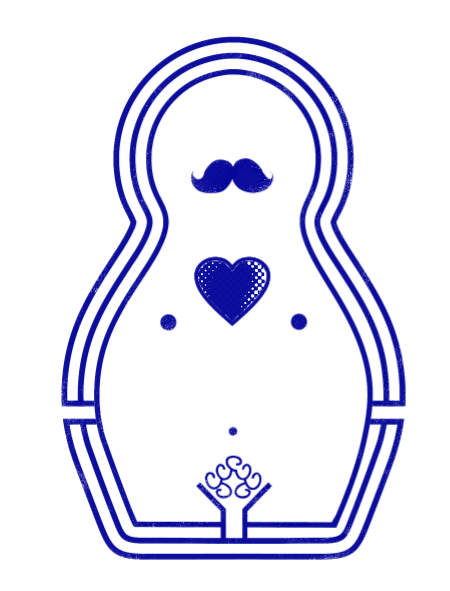

Something to say?
Tell us what you think of this article. If it’s good or bad, if you think we are idiots, or if you see us in hell. Even if you are a few words person, to improve people’s lives, help us spread it.
Share it in your networks!