
Sexual Diversity
Homosexual Behavior and Homosexuality: They Are Not the Same Thing

Homosexual behavior and homosexuality in Harris Wofford and Matthew Charlton.
Image credit: Harris Wofford via Civic Documentaries.
Homosexual behavior and homosexuality are often confused, but they are different concepts. Having a sexual experience with someone of the same sex/gender does not automatically make someone homosexual. Likewise, a person may identify as homosexual without ever having had sex.
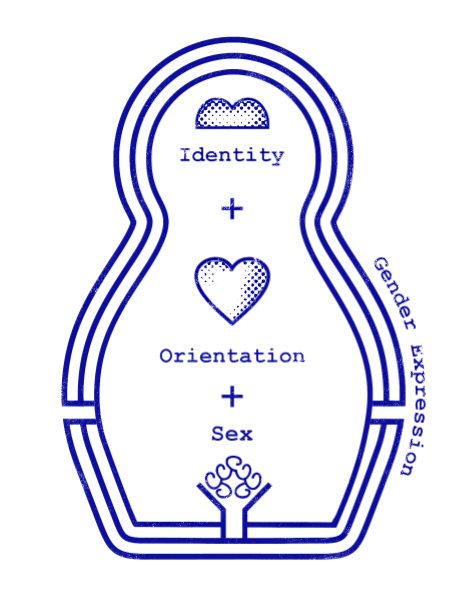
Human sexual identity is complex. To understand it, we use concepts such as sexual orientation, sexual behavior, biological sex, gender identity or gender expression. All of them describe different dimensions of human sexuality. Homosexuality, meanwhile, is an identitarian subcategory, socially constructed, and mainly related to orientation and sexual behavior, but one that does not completely define a person’s sexual identity.
Distinguishing between homosexual behavior and homosexuality helps us better understand human sexual diversity and avoids many unnecessary conflicts.
From Behavior to Identity
I remember exactly when it all began. I must have been about fifteen. I was a teenage boy growing up in Spain in the 1980s and had already had several girlfriends. There had always been a quiet undercurrent in the background, along with a few experiences during childhood and adolescence—also with girls—that I had never quite known how to make sense of. Everything seemed relatively straightforward until one night, at a school dance, the question appeared.
“What if you’re gay?”
I was terrified.
The reassuring explanations came immediately: that it was normal to have doubts during adolescence, that lots of people got confused, that it was probably just a phase. But the question refused to go away. What if the people who had hinted at it were right? What if you really were gay?
I became deeply anxious.
For years, I believed that was the right question. Today, I don’t.
Without realizing it, I had followed the same path my culture had taught me to follow: from behavior to identity. I had assumed that those experiences proved I was gay. Eventually, I realized I had been confusing two different things: homosexual behavior and homosexuality.
That confusion was not mine alone. For a long time, it has also shaped the way our culture has understood sexual diversity. And that is precisely the distinction this article sets out to explain.
Homosexual Behavior
Homosexual behavior is simply the set of erotic-affective practices, fantasies, emotional bonds or behaviors between people of the same sex/gender.
Such behavior has existed throughout all known human cultures and historical periods, as well as in more than 1,500 animal species scientifically documented. What changes from one society to another is not the behavior itself, but the way it is interpreted.
Even today it is common to find texts referring to “animal homosexuality.” However, animals do not construct human sexual identities such as homosexual, heterosexual or bisexual. What we observe in them is sexual behavior.
That is why we cannot say that an Egyptian pharaoh was homosexual in the modern sense of the word. He may have engaged in homosexual relationships or behaviors, but the identity category “homosexual” did not yet exist. Neither did heterosexuality as an identity.
For much of history, people were not classified according to a sexual orientation understood as a stable identity. Certain acts were simply considered acceptable or unacceptable, moral or immoral, legal or illegal.
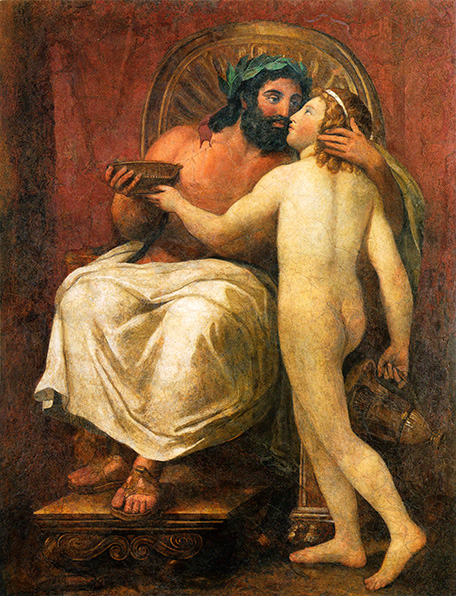
Zeus and Ganymede represent homosexual behavior, not a modern homosexual identity.
Every culture integrated homosexual behavior differently. Modern society mainly interprets it through identity categories such as homosexual, heterosexual or bisexual.
It also makes little sense to speak of “homosexual lions.” Lions do not possess human sexual identities. What we observe in them is homosexual behavior.
And that is precisely what makes it interesting.
When we observe sexual behavior without immediately reducing it to identity categories, sexual diversity appears as a much broader and more natural continuum.
Homosexual behavior can be observed in very different contexts: in ancient societies, in certain closed institutions, in occasional relationships, in long-term affective bonds or throughout nature.

Lions display homosexual behavior, but they do not construct homosexual identities.
And once we begin comparing, we also begin to understand that human sexuality is far more plastic than we usually imagine.
Homosexuality
Homosexuality is not homosexual behavior itself, but rather an identity-based way of interpreting and socially organizing it.
The categories homosexual, heterosexual and bisexual allow people to describe themselves, recognize themselves and position themselves socially. They are useful and form part of our culture. But they do not exhaust the full complexity of human sexuality.
Two people may have similar behaviors and yet identify in completely different ways.
And the opposite also happens: people who share the same identity may live their sexuality in very different ways.
Sexual identity does not arise from a single isolated element, but from the interaction between multiple dimensions: sexual orientation, sexual behavior, affection, gender identity, gender expression, cultural context, personal history and life experiences.
Homosexual behavior does not necessarily imply homosexuality.
Harris Wofford
An interesting example is Harris Wofford. After decades of marriage to a woman and becoming widowed in his seventies, he began a romantic relationship with a man several decades younger than himself, Matthew Charlton, whom he eventually married.
Wofford did not need to redefine his entire previous life or forcibly fit himself into a new identity label. His story shows just how complex, flexible and changing human sexuality can be.
Harris Wofford publicly spoke about his relationship through an article published in The New York Times.
Something similar happens with many people who discover unexpected desires or emotional bonds at different moments in their lives. Some adopt a homosexual or bisexual identity. Others feel no need to do so. Neither response invalidates the lived experience.
Human sexuality does not always fit neatly into rigid categories.
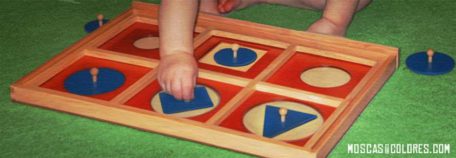
Human sexuality is more diverse and flexible than we usually imagine. It does not always fit easily into rigid categories.
Human Sexuality Is Complex
For a long time, Western societies have tended to classify people through rigid and exclusionary sexual categories: heterosexual or homosexual, man or woman, normal or different.
However, real human experience is usually far more complex.
As early as the 1940s, Alfred Kinsey observed that many people did not fit completely within rigid sexual categories. His famous Kinsey scale proposed representing human sexuality as a continuum between exclusive heterosexuality and exclusive homosexuality, showing that a large part of the population experienced different degrees of attraction, behavior or fantasy throughout their lives.
The Kinsey scale does not fully explain the complete complexity of human sexual identity, but it helped challenge the idea that sexuality consisted only of totally separate and fixed categories.
You can learn more about the Kinsey scale here.
Many people experience fantasies, desires or emotional bonds that do not fit perfectly within a single identity category. Others change throughout their lives. Some never feel the need to define themselves at all.
That does not make sexuality chaotic or nonexistent. It simply shows that human sexual identity is a rich, dynamic and multidimensional reality.
Distinguishing between homosexual behavior and homosexuality helps us understand that complexity without reducing it to overly simplistic labels.
A Different Future
The generation before mine often lived double lives. My own generation still grew up under strong pressure to fit into certain sexual categories. Future generations will probably experience their sexuality in a more open and less anguished way.
Perhaps one day many people will be able to experience their sexuality without constantly needing to ask themselves exactly what they are.

Human sexuality is not a simple or completely fixed reality, but rather a complex and plastic one.
A homosexual experience does not necessarily destroy a previous identity, but can sometimes simply expand a person’s understanding of themselves.
Homosexual behavior and homosexuality are related concepts, but they are not equivalent. And understanding that difference helps us better understand human sexual diversity.
Tag :Bisexuality, Compared Sexuality, Heterosexuality, Relationship, Sex, Sexual Diversity, Sexual Plasticity, Sexual orientationAnd leave us a comment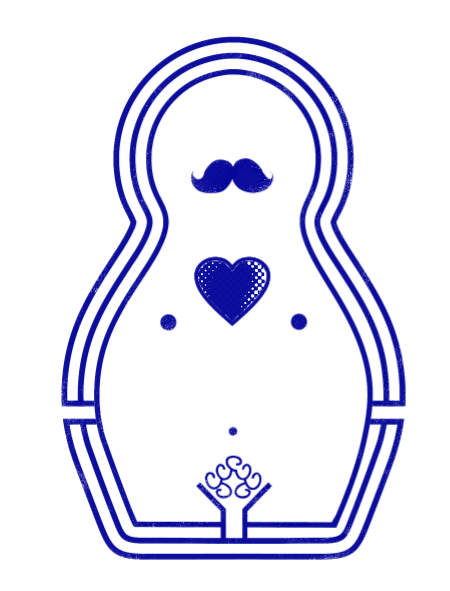

Something to say?
Tell us what you think of this article. If it’s good or bad, if you think we are idiots, or if you see us in hell. Even if you are a few words person, to improve people’s lives, help us spread it.
Share it in your networks!